
SYSTEM ARCHITECTURE: HPII v1.0
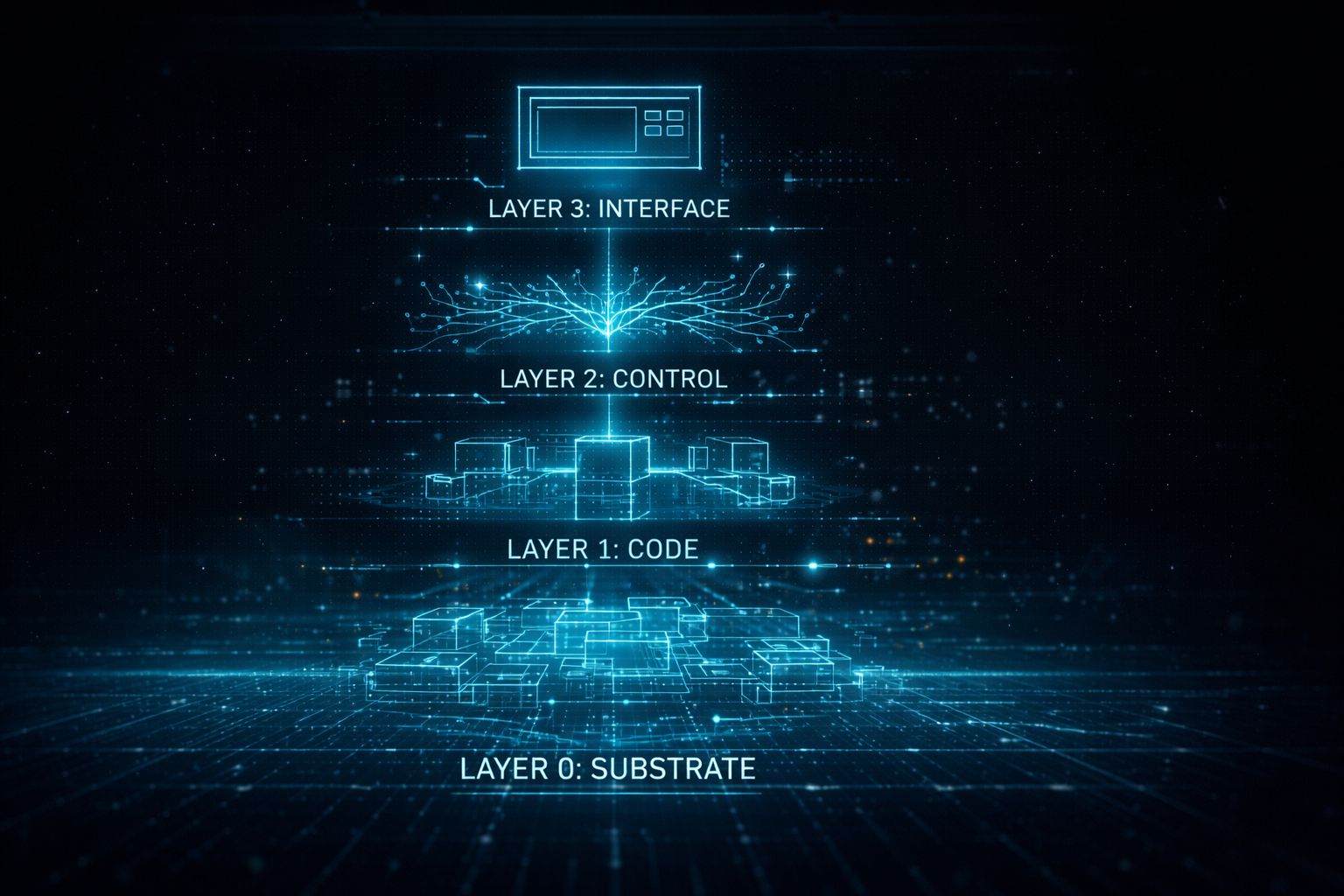
The Holographic Stack
Standard Physicalism attempts to generate consciousness from matter. HPII inverts the stack.
HPII (Holographic Process-Informational Idealism) is a unified architecture that integrates the non-local substrate of Analytic Idealism with the mechanistic rules of Digital Physics.

THE CORE LOGIC
Reality is a Filter, Not a Factory
Standard neuroscience relies on the Production Hypothesis: the assumption that the brain generates consciousness like a factory produces steam. Under this model, the brain is the hardware and the mind is the software.
But this model faces a fatal paradox: The Inverse Correlation. A factory cannot increase production when its power line is cut, yet clinical data shows that drastically reducing brain function—whether through metabolic collapse or chemical suppression—often triggers a significant increase in the complexity of awareness.
HPII proposes the inverse: The Filter Hypothesis. While this concept has a deep history—championed by thinkers like Henri Bergson and William James—HPII provides the modern informational framework to explain how that filter operates. In this model, the brain is a Reducing Valve:
The Substrate: Consciousness is the fundamental field of reality (Mind-at-Large).
The Valve: A biological mechanism evolved to filter infinite mind into a survival-oriented trickle.
The Result: Physical reality is the dashboard of the car, not the engine.
This model resolves the mystery of the Hardware Violation. If the brain acts as a filter, then neural decay acts as a Disinhibition Event—the failure of the biological braking system—allowing the underlying signal to shine through the "noise floor" one last time.
LAYER 0: THE SUBSTRATE
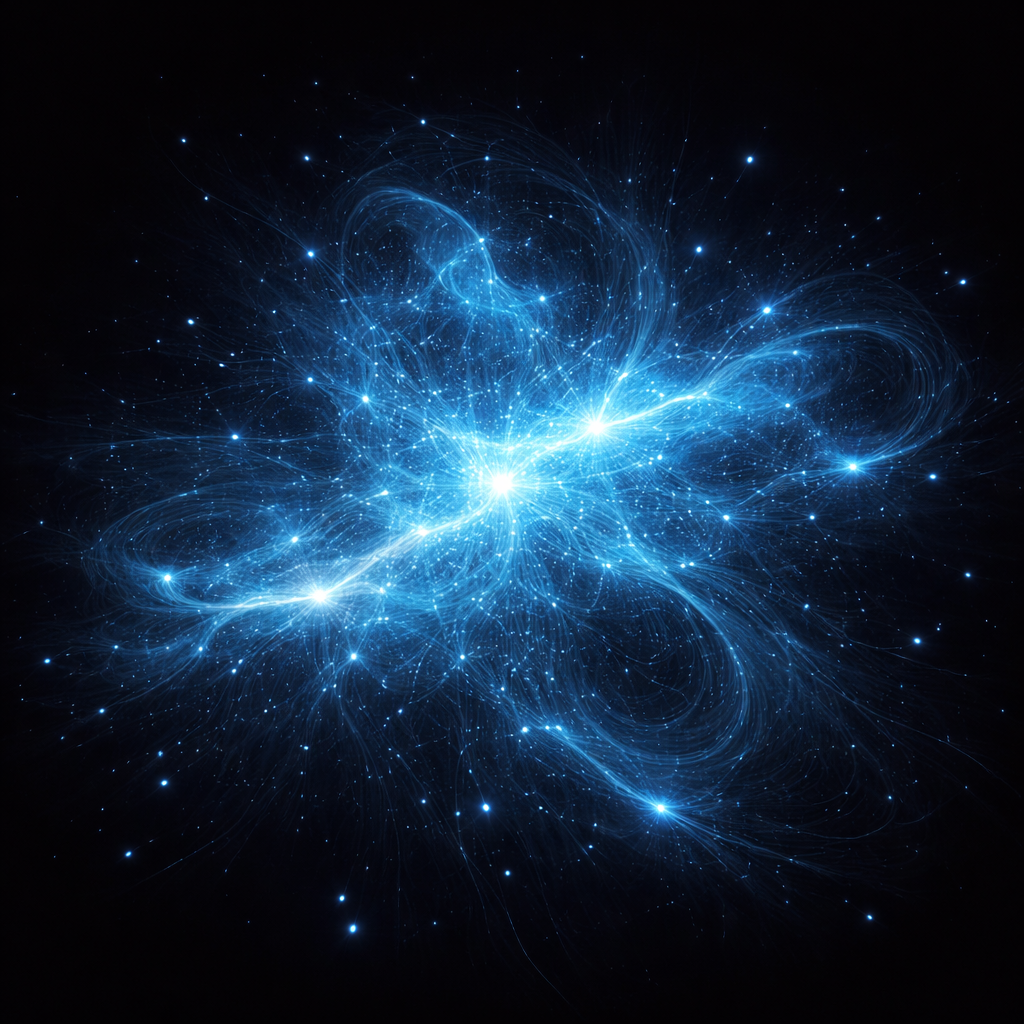
Concept: Mind-at-Large
Role: The Foundational Operating System
Consciousness is the ontological primitive, not matter. This layer is a non-local, high-bandwidth field of potential from which all individual subjects are dissociated "alters." In this model, physical reality is not the ground of existence, but the extrinsic appearance of this underlying mental field.
LAYER 1: THE PARTITION & CODE
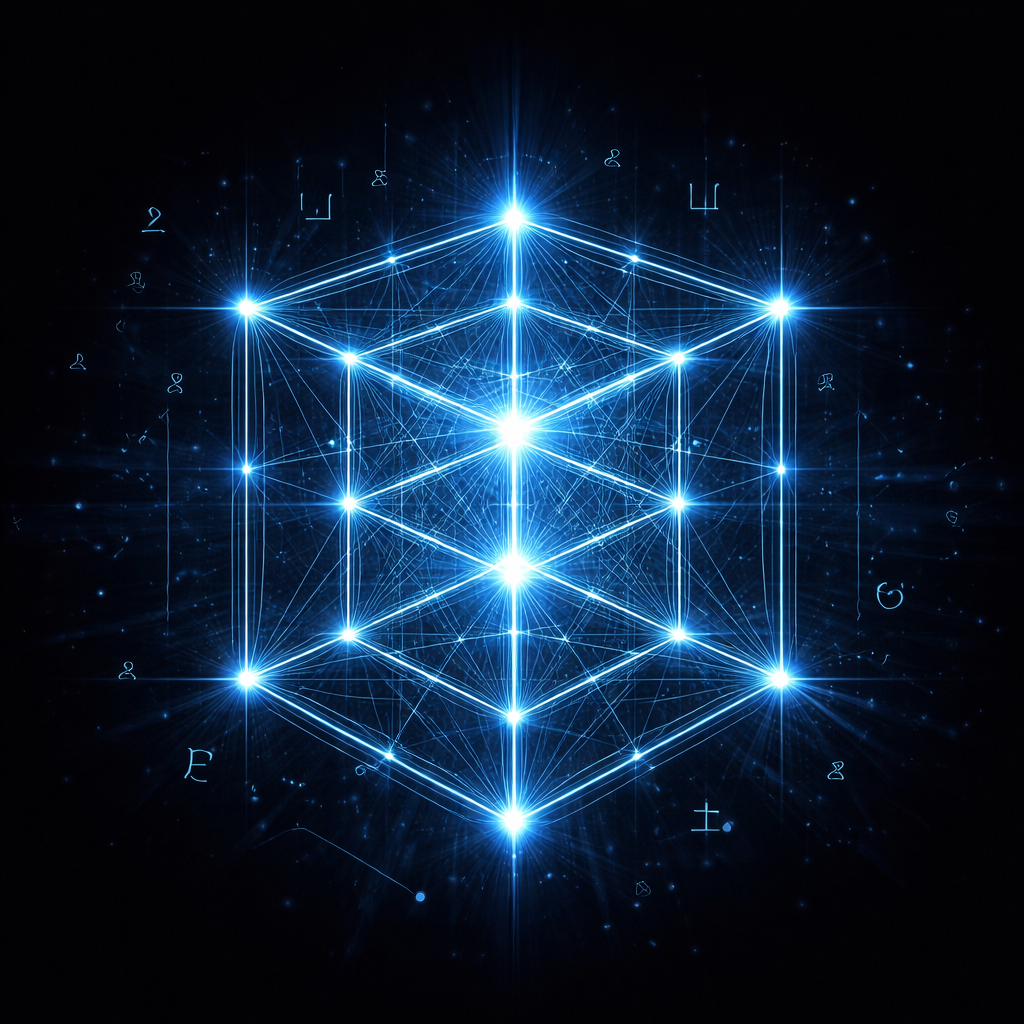
Concept: The Holographic Screen
Role: The Physics Engine
Physical laws are not fundamental. They are Error-Correcting Codes that stabilize our reality. This layer represents the Holographic Partition: the mathematical boundary that slices the infinite 'noise' of the Ruliad into the coherent 'signal' of spacetime. Geometry and gravity emerge from the entanglement structure of this boundary.
LAYER 2: THE CONTROL
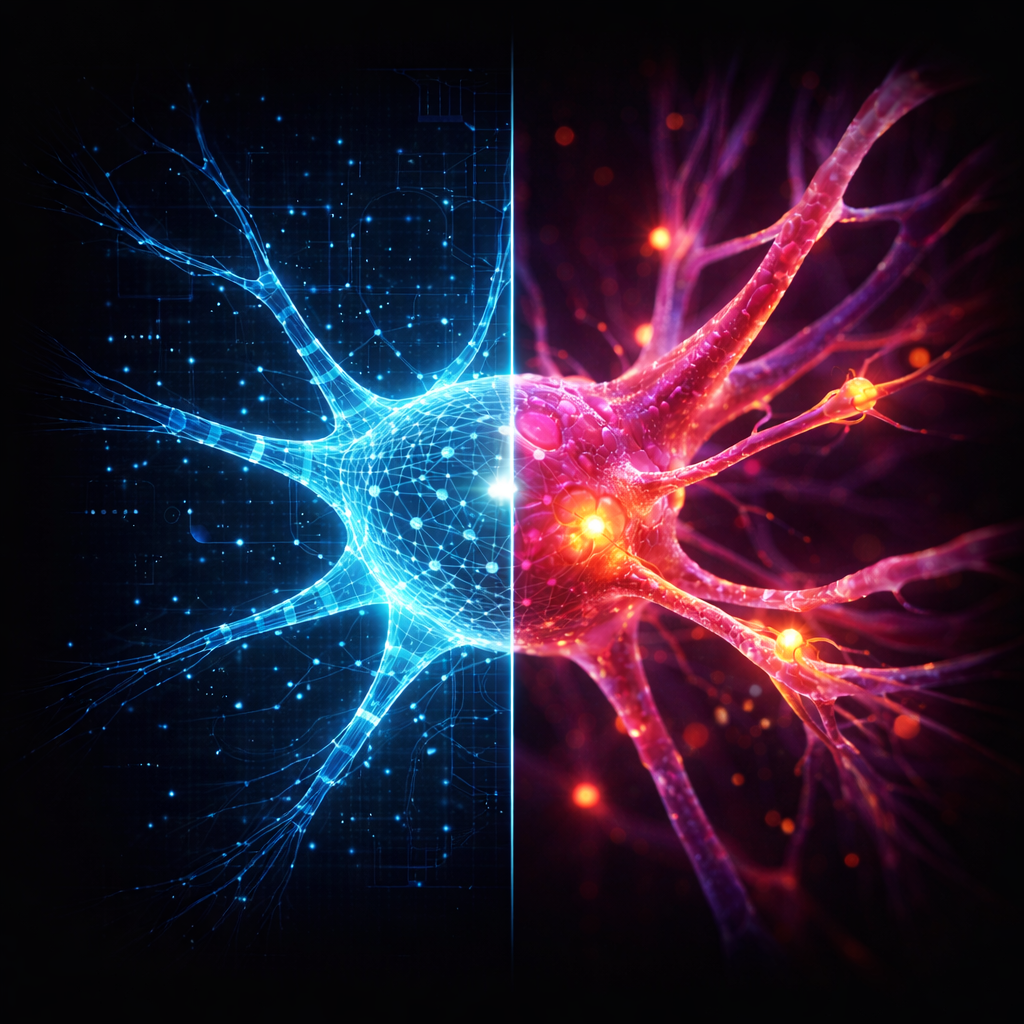
Concept: Bioelectric Morphogenesis
Role: The Logistic Bridge
Biology is orchestrated by a high-level Bioelectric Control Layer. Voltage gradients across cell membranes act as the Logistic Bridge, gating the secretion of signaling molecules (morphogens) and scaling anatomy. This layer allows the Mind (Layer 0) to override genetic defaults and instruct the biological hardware top-down (validating the Harris/Bates findings on Kir2.1 gating).

LAYER 3: THE INTERFACE
Concept: The Predictive Filter
Role: The User GUI
Spacetime is a "User Interface" evolved for fitness, not truth. The brain does not generate consciousness; it constrains it via Predictive Processing. This interface allows the Mind (Layer 0) to exert control over the Hardware (Layer 2) by actively gating sensory and metabolic signals. We experience reality through this "Dashboard," which keeps the infinite data of the substrate at a manageable level.
System Overview: The Partition Logic To understand HPII, visualize a cup dipped into the ocean:
The Ocean is the Substrate (Infinite potential).
The Cup is the Partition (The boundary that creates "you").
The Shape is the Control (Bioelectric architecture).
The Label is the Interface (How you perceive the water).
Why the Partition Matters
In the HPII model concept, the "Self" is not a thing. It is a nested set of boundaries maintained by metabolic energy. The individual is defined by what it excludes:
Cosmological: The Horizon separates your perspective from the infinite potential.
Biological: The Membrane separates your cells from the environment.
Neurological: The Thalamic Gate separates your attention from the raw data stream.
Psychological: The Ego separates your identity from the collective field.
Forensic Note: The Cost of Privacy Maintaining these partitions is metabolically expensive. When the "Brakes" fail due to energy loss (such as in the agonal phase of death), the partitions dissolve. This explains the surge of complex clarity in Terminal Lucidity. As the biological system fails, the "Alter" reintegrates with the high-bandwidth field of Mind-at-Large.
Why This Architecture?
Standard models force a fatal choice: preserve the laws of physics (at the expense of consciousness) or explain consciousness (at the expense of physics).
HPII is currently the only candidate in our audit that remains thermodynamically solvent. It integrates the "Holographic Bounds" of quantum gravity with the "Hardware Violations" of clinical neuroscience.
By stacking Holographic Error Correction (Layer 1), Bioelectric Control (Layer 2), and Predictive Filtering (Layer 3), it provides a complete mechanism for how mind drives matter without breaking the laws of nature.
The Goal: Functional Convergence
The ultimate objective is not to promote a specific theory, but to find the model that survives the data. Whether we ultimately converge on HPII or an even more robust framework, the requirement remains: the model must be solvent across all forensic domains.
Finding this Logistic Bridge moves us from treating the mind as a black box to understanding its specific mechanics. This leads to:
Psychology: Shifting from "chemical imbalance" models to "filter-tuning" protocols that address the source of the informational signal.
Neuroscience: Mapping how intent gates the bioelectric hardware, allowing for precise interventions in neurodegeneration and cognitive health.
Physics: Providing a grounded, mechanistic definition of the observer's role in the physical simulation.
Convergence doesn't just provide answers; it provides better solutions.